




About Tunnel Rush
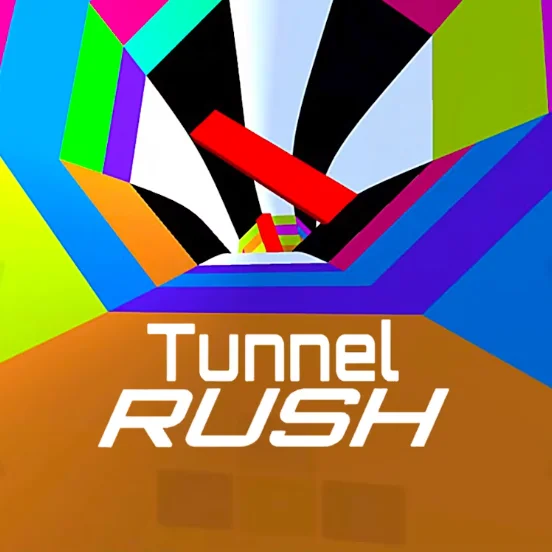
The defining mechanic in Tunnel Rush is clear from the first attempt: Tunnel Rush is a tunnel runner built around one clear interaction: steer through a rotating tunnel, avoid obstacles, and go as far as possible. Touching an obstacle ends the run. The objective is to survive and travel as far as possible.
The finish line is simple — survive and travel as far as possible. What gives the game its character is the constraint around that goal. The next decision can often be prepared before the current one is finished, which reduces last-second corrections.
Game Facts
What Makes Tunnel Rush Stand Out
The tunnel is not just scenery in Tunnel Rush; it determines how early you need to make each movement. Steer through a rotating tunnel, avoid obstacles, and go as far as possible. Touching an obstacle ends the run. The safest habit is to treat the next opening as the real target. The next decision can often be prepared before the current one is finished, which reduces last-second corrections.
That detail is easy to overlook in Tunnel Rush. Looking farther ahead instead of watching the position you are currently in before the decision arrives gives you a clearer starting position for the action that follows.
How to Play Tunnel Rush
- Learn the basic input: Left/Right Arrow or A/D to move.
- The main loop is simple: Steer through a rotating tunnel, avoid obstacles, and go as far as possible. Touching an obstacle ends the run.
- You are working toward one result — survive and travel as far as possible.
Controls
Tips & Strategy
Core Gameplay Mechanics
Looking farther ahead instead of watching the position you are currently in
The tunnel is not just scenery in Tunnel Rush; it determines how early you need to make each movement. Steer through a rotating tunnel, avoid obstacles, and go as far as possible. Touching an obstacle ends the run. The safest habit is to treat the next opening as the real target. The next decision can often be prepared before the current one is finished, which reduces last-second corrections.
That detail is easy to overlook in Tunnel Rush. Looking farther ahead instead of watching the position you are currently in before the decision arrives gives you a clearer starting position for the action that follows.
During: Looking Ahead Creates the Decision Window before the decision arrives
The useful detail: Look farther ahead instead of watching the position you are currently in. The point is to create a decision window before the obstacle or target arrives. Use short presses instead of holding the key. That small change in attention makes Tunnel Rush less reactive because you are planning the next move instead of correcting the current one.
That detail is easy to overlook in Tunnel Rush. Looking Ahead Creates the Decision Window before the decision arrives gives you a clearer starting position for the action that follows.
After: The Advanced Detail Hidden Inside the Core Mechanic
Use small movements to save space. Tunnel Rush rewards planning rather than simply faster inputs. Try using one finger on each side for faster reactions.
Think of the advanced detail hidden inside the core mechanic as a preparation step in Tunnel Rush; the benefit appears one move later, when you still have room to react.
Four details worth remembering
Looking farther ahead instead of watching the position you are currently in before the decision arrives
That detail is easy to overlook in Tunnel Rush. Looking farther ahead instead of watching the position you are currently in before the decision arrives gives you a clearer starting position for the action that follows.
Looking Ahead Creates the Decision Window before the decision arrives
That detail is easy to overlook in Tunnel Rush. Looking Ahead Creates the Decision Window before the decision arrives gives you a clearer starting position for the action that follows.
The Advanced Detail Hidden Inside the Core Mechanic
That detail is easy to overlook in Tunnel Rush. The Advanced Detail Hidden Inside the Core Mechanic gives you a clearer starting position for the action that follows.
What Becomes Easier After a Few Attempts
That detail is easy to overlook in Tunnel Rush. What Becomes Easier After a Few Attempts gives you a clearer starting position for the action that follows.
Frequently Asked Questions
What is the main objective in Tunnel Rush?
The main objective is to survive and travel as far as possible.
Which movement input should you learn first in Tunnel Rush?
On the listed browser setup, Tunnel Rush uses Left/Right Arrow or A/D to move.
Where should you look when the next obstacle is coming in Tunnel Rush?
Start with the idea in “Looking farther ahead instead of watching the position you are currently in before the decision arrives.” It gives the first few attempts a clear decision to repeat.
Why does Looking farther ahead instead of watching the position you are currently in before the decision arrives matter in Tunnel Rush?
That detail is easy to overlook in Tunnel Rush. Looking farther ahead instead of watching the position you are currently in before the decision arrives gives you a clearer starting position for the action that follows.
When is The Advanced Detail Hidden Inside the Core Mechanic useful in Tunnel Rush?
Think of the advanced detail hidden inside the core mechanic as a preparation step in Tunnel Rush; the benefit appears one move later, when you still have room to react.
What usually causes a run to fail in Tunnel Rush?
Watch for this failure point in Tunnel Rush: falling, hitting an obstacle, or committing to the next movement too late.
Who is Tunnel Rush a good fit for?
Tunnel Rush is rated hard and suits players who enjoy high-speed reflex games. A good first habit is to look farther ahead instead of watching the position you are currently in.